
The short answer
Bali works with kids if you base in Sanur or a Seminyak resort, see the doctor eight weeks out with the children, treat bottled water and sun cover as rules rather than habits, and plan around the two things Bali does not have: footpaths and car seats.
The guide's family answer is short. Sanur is calm, flat and family-friendly, with a beachfront path you can push a stroller along, a reef-sheltered beach and an older, quieter crowd; a resort in Seminyak is the other easy answer. Canggu works but the scooter traffic and the spread-out layout make the days harder work with a pram; Ubud is lovely for a few nights with kids old enough for a waterfall and a rice-terrace walk.
The health rules come from healthdirect and are stricter for babies than for anyone else: sunscreen is not recommended under six months, a baby under six months with gastro sees a doctor, and children should never be given adult anti-diarrhoea medicines. Smartraveller adds the eight-weeks-out doctor visit for the kids, the equipment check (pools, balconies, car seats, cots), and the consent letter when only one parent travels.
Where to stay in Bali with kids
Sanur first. The guide's description is calm, flat and family-friendly, with a beachfront path for a stroller, a reef-sheltered beach that suits paddling, and an older, quieter crowd; it is also the ferry gateway to the Nusa islands, which older kids will want. Seminyak is the resort answer: proper pools, easy dinners, central, and closer to the airport than Canggu, which matters at the end of a red-eye with a toddler.
Canggu is not wrong, but the where-to-stay comparison is honest about it: the scooter traffic and the spread-out layout make the days harder work with a pram. Ubud is the second stop once the kids are old enough for a waterfall and a walk; the guide's split-stay advice applies to families too, just with fewer moves. The where-to-stay quiz weighs the family answers the same way.
Under 5
Sanur or a Seminyak resort for the whole stay. One base, a pool, the beachfront path, and a driver for one day trip.
5 to 12
A Seminyak or Sanur base plus two or three nights in Ubud: the terraces, a gentle waterfall, the monkeys with pockets zipped.
Teenagers
The first-trip split works as is: coast then Ubud, with a surf lesson at Kuta beach and Nusa Penida overnight if the trip is long enough.
The doctor visit: eight weeks out, kids included
Smartraveller's children page is explicit: take your children to a doctor or travel clinic at least eight weeks before you leave, ask whether your travel plans affect their health, and find out the common health risks for kids where you are going. healthdirect's vaccination timing is six to twelve weeks, because some vaccines need more than one dose. Take the routine schedule with you; the vaccinations page has what the Australian Immunisation Handbook says about Indonesia and about children.
Two more lines from the same Smartraveller page belong in that appointment. Check whether your child's medicine is legal where you are going, because some countries control or ban ADHD medicines, and Indonesia is one of them; and some over-the-counter medicines are banned overseas too. The medical kit page has the restricted list and the kids' additions.
Water, formula and bottles
healthdirect's rule for places where the tap water is not safe applies to every bottle, cup and toothbrush in the family: only use bottled water to drink and brush your teeth, no ice, only fruit you can peel, no uncooked food such as salads. For a baby that means sealed bottled water for formula and for rinsing bottles, and the same water for a toddler's cup. The water page has the formula and sterilising detail.
If your baby is under 6 months, take them to a doctor if you think they have gastro. If they are older, it is still a good idea for them to be checked in case they are dehydrated.
If a child does get gastro, healthdirect's rules are the ones to follow: keep them hydrated with oral rehydration fluids; if they refuse them, diluted fruit juice at one part juice to four parts water, ice cubes, jelly or slushies, or a medicine syringe of water; keep breastfeeding, feeding more often if needed; give formula-fed babies the usual amount and rehydration fluid if still thirsty; and do not give anti-diarrhoea medicines to children, because many medicines adults take can be dangerous for babies. Dehydration is the main complication and it happens faster in babies and children. Our what-to-do page has the red flags and where the international clinics are.
Sun and heat
Babies and children have more delicate skin than adults and can burn more easily. Use a sunscreen for children that is made for their sensitive skin. Sunscreen is not recommended for babies under 6 months.
The guide's line for adults is that the sun is stronger than the temperature suggests, and healthdirect's rules for children make it a plan: keep babies under six months out of the sun altogether, and for older children use a children's sunscreen, hats, rashies and shade. Denpasar's mean maximum sits between 29.6 and 34.4 °C every month of the year, so the pool at midday is a shade question, not a swim question. Seek urgent care for signs of heatstroke, which healthdirect lists for babies as well as adults; the packing tool's 'with kids' option adds sunscreen, hats and rashies to the list.
Getting around with a pram or a carrier
Footpaths are patchy, which is the guide's reason a carrier wins on temple steps and why the packing list offers a carrier or a light stroller rather than a big pram. Sanur's beachfront path is the exception that makes it the family base. Around town, ride apps are the answer for adults and the problem for kids: they do not carry car seats. Smartraveller's children page asks you to check the safety standards of any equipment you will use, car seats included, so the practical options are a pre-booked hotel pickup that can provide one, a private driver for the day trips, or bringing your own.
The guide's scooter talk applies with a child on board, twice over: legally a motorcycle licence at home plus an International Driving Permit in the motorcycle class, and Smartraveller's line that insurers deny claims for the unlicensed. A private driver, a full day door to door for roughly IDR 600-900k in the guide's July 2026 ballparks, is the family day-trip answer. The getting-around page has the rest.
Pools, balconies, boats and monkeys
Check the safety standards of any equipment you'll use. This includes pools, balconies, car seats, cots and play equipment.
Pool villas are the norm in Bali and most pools are unfenced, which is the single biggest practical difference from home; ask before you book, and treat the pool as a supervised place from the moment you arrive. Balcony rails can be lower than Australian standards; check them on arrival. Boats: Smartraveller says it is unlikely the crew will have life jackets for children, which decides the fast-boat question for most families, and it lists two fatal incidents in the last two years. Monkeys at Uluwatu and the Monkey Forest snatch hats, sunglasses and phones, and rabies is throughout Indonesia and 100% fatal in Smartraveller's words, so no feeding, no touching, and a 15-minute soap wash and a clinic if anyone is bitten or scratched.
Documents: the consent letter, the passport and the levy
Every child needs their own passport with at least six months' validity from arrival, their own e-Visa on Arrival and their own arrival card; the visa page has the official sites. The Bali tourist levy is IDR 150,000 per person; the Love Bali site lists exemptions for transit and certain visa types, and we found no child exemption stated there, so budget for it and check the FAQ on the day.
If only one parent is travelling, Smartraveller says you may need extra documents, especially if you do not share a surname with your child: proof of the other parent or guardian's consent for the child to travel. Before taking a child overseas you must have consent from anyone with parental responsibility, or a court order. Write the letter, carry a copy of the other parent's ID, and put both in the same folder as the screenshots of the visa, arrival card and levy receipt. The trip checklist adds this item, dated, when you tick 'travelling with kids'.
Packing for kids
The packing list adds a short list when you tick 'with kids', which is the same list the guide's packing chapter gives:
- Kids' sunscreen, hats and rashies. The sun is stronger than the temperature suggests; under six months, shade instead of sunscreen.
- Snacks they will actually eat, for the flight and the first jet-lagged morning.
- A carrier or a light stroller. Footpaths are patchy; a carrier wins on temple steps.
- Swim nappies or floaties. Pool villas are the norm and the pool is right there.
- Packing cubes, one per person, and the suitcase stops being a pile.
- Oral rehydration sachets and the children's medicines your doctor suggested, in original packaging with the script.
Bali has minimarts on every corner, so nappies, wipes and formula are buyable; bring enough for the first days and the brand you know for the rest.
The questions parents ask
Is Bali safe for kids?
Is Bali good for toddlers?
Where should I stay in Bali with a toddler?
Can babies drink the water in Bali?
Do kids need vaccinations for Bali?
Do kids pay the Bali tourist levy?
Can you take a pram to Bali?
What should I pack for kids for Bali?
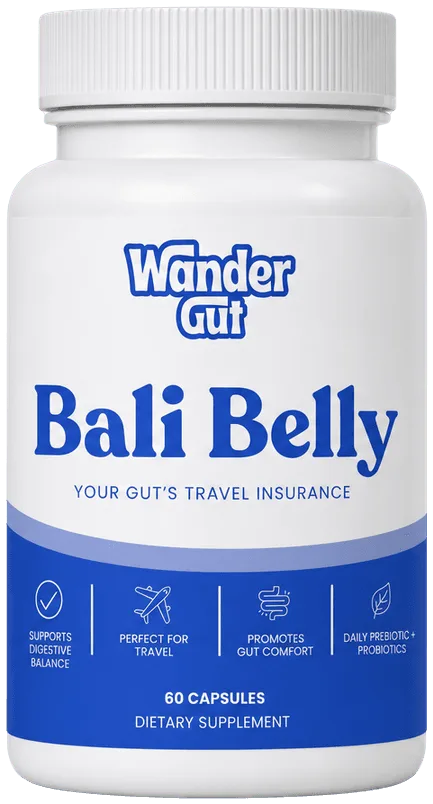
Bali Belly: the travel probiotic made for Bali and beyond
Your travel companion: 60 billion CFU, five strains plus a prebiotic, shelf-stable so it needs no fridge and lives in the day pack. Two capsules a day, from about a week before you fly and every day you are away. Suitable for adults and children over 3.
- 60 billion CFU
- 5 strains plus a prebiotic
- No fridge needed
- Ships from Australia
Always read the label and follow directions for use. Everything on this site is free and stays free: the guide, the tools, the checklists. The shop is what pays for it.
Sources and dates
- Smartraveller, Travelling overseas with children. Read 13 September 2026.
- Smartraveller, Indonesia travel advice, updated 11 September 2026, still current on the day we read it. Read 13 September 2026.
- healthdirect, Gastroenteritis, last reviewed November 2025. Read 13 September 2026.
- healthdirect, Sunburn and sun safety. Read 13 September 2026.
- healthdirect, Travel health advice, last reviewed December 2025. Read 13 September 2026.
- healthdirect, Travel vaccinations, last reviewed September 2025. Read 13 September 2026.
- healthdirect, Dengue fever, last reviewed February 2025. Read 13 September 2026.
- Smartraveller, Travel health, last updated 18 August 2026. Read 13 September 2026.
- Love Bali, the Bali provincial government's tourist levy site, levy amount. Read 13 September 2026.
- The Wander Gut Bali guide, chapters on when to go, where to base yourself, getting around and the gotchas, verified July 2026. Read 13 September 2026.
Left out on purpose because we could not verify it from a primary source: child exemptions from the tourist levy or the e-VOA (none stated on the official pages we read); car seat availability with ride apps or drivers; kids' club and resort names; child-specific dengue advice beyond healthdirect's general page.