
The short answer
No, do not drink tap water in Bali or brush your teeth with it. Drink sealed bottled water, the sealed-gallon dispenser water villas and cafés run on, or water boiled for at least five minutes. Ice at established venues is usually factory ice and fine; ice from a bucket at a stall is not.
Smartraveller's Indonesia advice is to boil drinking water or drink bottled water. healthdirect's precautions for anywhere the tap is not safe are to use bottled water for drinking and teeth, keep ice out of drinks, eat only fruit you can peel and avoid uncooked food. The Victorian Department of Health adds the boiling time: at least five minutes.
The sections below take each real-world situation in turn: the hotel tap, the villa dispenser, the ice in your drink, the shower, the pool, and making up a bottle for a baby.
Tap water, hotels and villas
The government advice does not distinguish between a five-star hotel and a homestay: the tap is the tap. Some resorts run their own filtration and say so, and if a hotel puts a sign on the basin saying the water is treated, that is the hotel's claim to make and yours to weigh; we cannot verify any particular property. The sealed bottle by the bed is what most of them provide because it settles the question.
Villas and most cafés run refill dispensers from 19-litre sealed gallons of treated water. That is what locals drink and it is the practical answer for a week: fill your own bottle from the dispenser, and skip the single-use plastic, which Bali's official dos-and-don'ts list for visitors also asks you to avoid. If the gallon arrived sealed, it is the same water as the small bottles.
Brushing your teeth
healthdirect includes teeth in its list, in so many words:
Where local tap water is not safe to drink, take these precautions: Only use bottled water to drink and brush your teeth. Don't put ice in your drinks. Only eat fruit you can peel. Avoid uncooked food, such as salads.
Keep a sealed bottle by the basin and use it for the brush and the rinse. Kids copy what they see, so do it visibly. A mouthful of tap water in the shower is not a catastrophe; the point is to keep it out of the routine rather than to panic about a splash.
The ice: the rule and the reality
healthdirect's line is don't put ice in your drinks, and that is the cautious end. Our guide, written by people who have spent a lot of time in Bali, gives the version regulars use:
The habits worth keeping, however adventurous you get: sealed bottled water, busy stalls with hot fresh food, and wash your hands. Be mindful with ice from places you don't trust. Reputable cafés and bars use factory ice.
Factory ice in Indonesia is made from treated water and delivered to venues in sealed bags; that is what the beach club, the busy café and the hotel bar are putting in your glass, and it is also what the fast-food chains people search about use. Ice chipped from a block on the pavement, or scooped from an open bucket at a roadside stall, is water you know nothing about. That is the distinction: the venue, not the ice.
We have not verified any specific outlet and will not name one as safe; the [dropped list](#sources) says so. The habit is the point: established places, factory ice; roadside bucket, no.
Boiled and filtered water
Yes, properly boiled tap water is fine to drink. The Victorian Department of Health says to boil tap water for at least five minutes before drinking it, and the same for making up formula. A villa kettle that clicks off at the boil has not done five minutes; use a pot.
Filtered water depends entirely on the filter, its maintenance and what it removes, none of which you can check in a rental. The sealed-gallon dispenser is a known quantity; a mystery filter under the sink is not. Bottled or dispenser water is the default; boiled is the backup.
Showers, pools and the sea
Showering in tap water is normal and what everyone does; the advice is about swallowing it, not standing under it. Pools and the sea are not on the government lists at all. The one route the sources describe is swallowing something contaminated, so the practical rule is the same as anywhere: mouth closed, and a rinse afterwards. Smartraveller does warn separately about rips and drownings at Bali's beaches, which is the bigger water risk by a distance; the health page covers it.
Babies, formula and kids' bottles
The Victorian fact sheet's rule for formula is bottled water or tap water thoroughly boiled for at least five minutes. For older kids, the sealed bottle rule for drinking and teeth, and a refillable bottle each from the villa dispenser so they are drinking more, not less, in the heat. healthdirect's guide for children over one is around 1 to 2 litres a day.
Children get dehydrated faster than adults when they are unwell, and a child who is not going to the toilet as often, or a baby with fewer wet nappies, is the early warning. Oral rehydration sachets from home go in the medical kit.
What happens if you drink the water
Probably nothing, and possibly Bali belly. Water contaminated with infected faeces is one of the two common routes for traveller's diarrhoea in the Victorian fact sheet, and the bugs it can carry are on the causes page. There is no way to know what was in a particular glass. A mouthful in the shower is not worth worrying about; a week of tap water is a bad bet.
If you do get ill, the what-to-do page has the self-care and the signs that mean a clinic. Most cases clear in a few days on fluids and plain food.
Every version of the question
Can you drink the water in Bali hotels?
Can you drink the water in Bali if you boil it?
Can you brush your teeth with tap water in Bali?
Is the ice safe in Bali?
Is the ice at McDonald's or Starbucks in Bali safe?
Can you drink filtered water in Bali?
What happens if you drink the water in Bali?
Is it safe to shower in Bali?
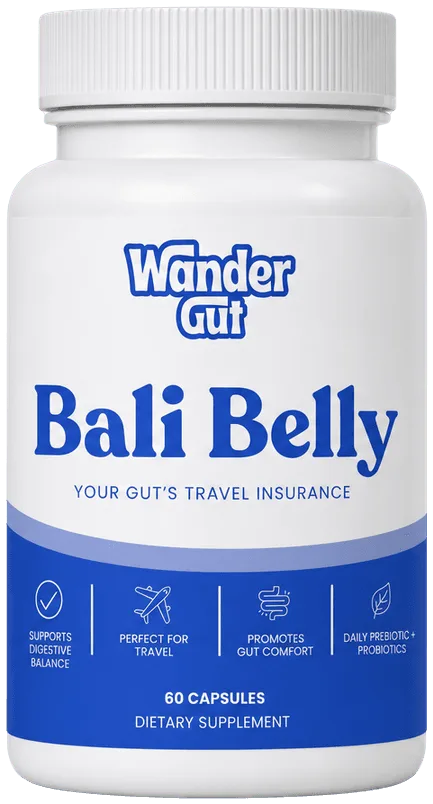
Bali Belly: the travel probiotic made for Bali and beyond
Your travel companion: 60 billion CFU, five strains plus a prebiotic, shelf-stable so it needs no fridge and lives in the day pack. Two capsules a day, from about a week before you fly and every day you are away. Suitable for adults and children over 3.
- 60 billion CFU
- 5 strains plus a prebiotic
- No fridge needed
- Ships from Australia
Always read the label and follow directions for use. Everything on this site is free and stays free: the guide, the tools, the checklists. The shop is what pays for it.
Sources and dates
- Smartraveller, Indonesia travel advice, updated 11 September 2026, still current on the day we read it. Read 13 September 2026.
- healthdirect, Travel health advice, last reviewed December 2025. Read 13 September 2026.
- healthdirect, Dehydration, last reviewed July 2024. Read 13 September 2026.
- Better Health Channel (Victorian Department of Health), Traveller's diarrhoea, the page states it was reviewed 31 July 2013; used for the causes and the risk-food list, which the newer sources repeat. Read 13 September 2026.
- The Wander Gut Bali guide, chapters on food, getting around, etiquette and gotchas, verified July 2026. Read 13 September 2026.
Left out on purpose because we could not verify it from a primary source: whether any specific hotel, café or chain's ice or water is safe, because we have verified none; Bali's municipal water quality figures, because we did not read a primary source for them.